
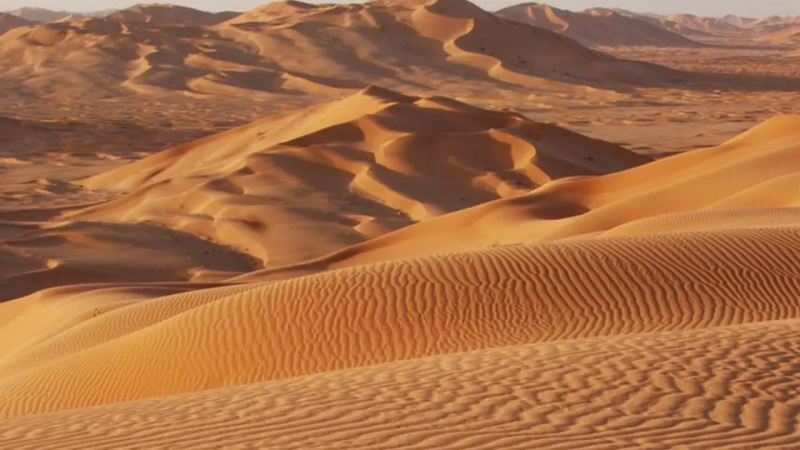

It may sound strange, but Saudi Arabia and the United Arab Emirates, which are counted among the world’s largest desert countries, have to import sand. The question arises that when these countries have no shortage of sand, then why is there a need to bring sand from outside?
In fact, the sand demanded by the future cities of Saudi Arabia, sky-rocketing buildings of UAE and mega projects worth billions of dollars is completely different from the commonly seen desert sand. This difference is forcing these countries to look towards far-flung countries like Australia. Let us understand it in detail.
Why does desert sand fail?
Desert sand particles are so smooth that they do not stick properly to cement. The result is that concrete becomes weak and cannot bear the weight of heavy buildings. Therefore, use of special type of sand is necessary in high buildings, bridges, metro and big infrastructure projects.
Australia becomes a big supplier of sand
Australia today is among the world’s largest exporters of construction-grade sand. In the year 2023, Australia exported sand worth about $273 million. In 2023, Saudi Arabia purchased natural construction sand worth about $1.4 million from Australia. This trend continued in 2024 also, especially when Saudi Arabia accelerated its big projects.
Projects like Saudi Arabia’s Vision 2030, Neom City, The Line, Red Sea Project and Qiddiya demand high quality concrete in large quantities. No compromise on quality is possible in these projects. In such a situation, importing foreign sand has become a compulsion.
Same is the story of Burj Khalifa
Even in the construction of the world’s tallest building, Burj Khalifa, local desert sand was not used. Crores of liters of concrete, thousands of tonnes of steel and special construction materials were used to build this building, in which sand imported from Australia had an important contribution.
UAE and Qatar are also on the same path
Not only Saudi Arabia, UAE and Qatar are also struggling with this problem. Large quantities of marine and foreign sand have been used to create the rapidly changing skylines, artificial islands and beach projects of Dubai and Abu Dhabi. Projects like Palm Jumeirah put huge pressure on local sand resources.
The shortage of sand facing the world
According to the United Nations Environment Programme, about 50 billion tonnes of sand is being consumed in the world every year. It has become the most extracted solid natural material in the world. Uncontrolled sand mining is causing river erosion, loss of biodiversity and deepening environmental crisis. In view of this growing crisis, many countries are working on options like reusing manufactured sand and construction waste. Saudi Arabia is also looking for such solutions, so that dependence on foreign sand can be reduced in future.