
Live telecast will take place globally, millions of people will be able to watch it on digital platforms.
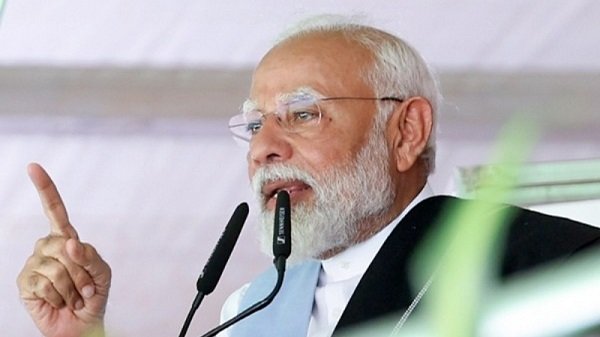
New Delhi. PM Narendra Modi will inaugurate the 11th edition of the Raisina Dialogue 2026 in New Delhi on Thursday, marking the beginning of India’s premier conference on geopolitics and geo-economics. The three-day event will bring together global leaders, policy makers and experts to deliberate on key international challenges. President of Finland Alexander Stubb will be the chief guest and deliver a speech at the inaugural session. Held with the participation of governments, think tanks and strategic communities from around the world, the dialogue will include representatives from 110 countries, including ministers, former heads of state and government, members of parliament, military commanders, business leaders, technology experts, academics, journalists and scholars. The theme of this year’s event is values-affirmation, harmony, progress.
According to media reports, six main topics will be discussed in this conference which will last for three days. Contested Boundaries: Power, Polarization, and Periphery; Rebuilding shared resources: new groups, new patrons, new pathways; White Whale: Achieving Agenda 2030; The Last Moment: Climate, Conflict, and the Price of Delay; The world of the future: towards a techno-world; and Trade in the Age of Tariffs: Recovery, Resilience, and Reconstruction. Around 2,700 participants are expected to attend the dialogue, while the proceedings will be broadcast live globally and watched by millions of people on digital platforms.
Organized by the Observer Research Foundation (ORF) in collaboration with India’s Ministry of External Affairs, the conference will run from March 5 to 7 and will analyze how technological disruption, strategic competition and economic security are reshaping global politics. Among the dignitaries participating in the dialogue are Ian Borg, Deputy PM and Minister of Foreign Affairs and Tourism of Malta, Lyonpo D N Dhungyel, Minister of Foreign Affairs and External Trade of Bhutan, Dhananjay Ramphul, Minister of Foreign Affairs, Regional Integration and International Trade of Mauritius and Barry Faure, Minister of Foreign Affairs and Overseas Affairs of Seychelles.
According to the Ministry of External Affairs, another dignitary attending the conference is Sri Lankan Minister of Foreign Affairs, Overseas Employment and Tourism Vijitha Herath. This year’s discussion focused on the tension between traditional alliances and the techno-polar world described by analysts, where influence is increasingly dictated by artificial intelligence, semiconductor supply chains and control over digital infrastructure. The dialogue will conclude with a discussion on India’s long-term development roadmap, including the vision of a developed India 2047, which aims to transform the country into a developed economy by the independence centenary.