
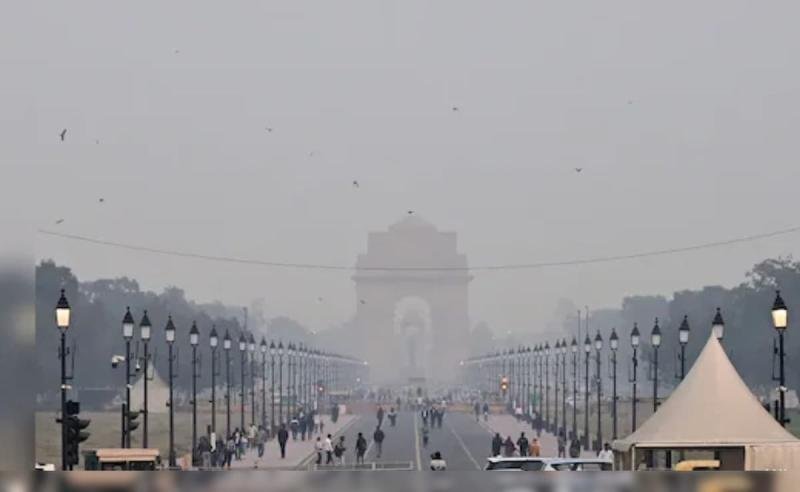

New Delhi. In the last two weeks, the sky in Iran has become dark due to loud explosions and smoke of bombs and missiles. After the attack on oil bases, many media reports even claimed that poisonous rain drops have started falling from the sky of Iran. Despite this, you will be surprised to know that despite the black smoke all around, the air of Tehran is cleaner than the air of India’s capital New Delhi. According to the latest report, Tehran’s air quality index (AQI) remains at good to moderate level of 50-70. In sharp contrast, Delhi’s AQI remains above 150, i.e. at a poor to unhealthy level. Despite black smoke all around, black sky, rapid attacks, poisonous conditions and fire, the clean air of Tehran has surprised the whole world. After this, it would not be wrong to say how seriously geographical location, industrial activities and agricultural pollution can affect the breathing of citizens. On the other hand, despite the war, what is the real impact of natural and man-made pollution.
Now understand why the air of Delhi is bad?
It can be understood that Delhi’s bad pollution is not due to war but due to geographical and industrial reasons. The city is located in the Indo-Gangetic Plain, which is considered one of the most polluted areas in the world. There is heavy traffic and industry here, construction work and dust also spread a lot. Along with this, it cannot be ignored that burning of agricultural waste (straw) is common in Delhi’s neighboring states like Punjab and Haryana. Due to these reasons, microscopic particles like PM2.5 spread in the air, which causes the most poisonous smog. Due to cold winds and temperature inversions, this smoke remains trapped near the ground. The result is that pollution in Delhi-NCR often remains above national standards.
Now let’s talk about the air of Tehran
There is no truth in the statement that Tehran is completely pollution free. There is pollution in Tehran too, but the biggest source here is smoke from vehicles. There are no activities like burning of agricultural waste here. There is less dense network of heavy industries in the surrounding area. Yes, it is true that due to geography, smoke can get trapped in winter, but the average level is less than Delhi. Although poisonous elements have entered the air of Tehran due to the attacks on oil depots during the US-Israel-Iran conflict, its air is still no worse than that of Delhi.
War is not the main cause of pollution
However, some experts had previously thought that oil rig fires could increase pollution throughout the region. But air quality experts say the recent smog in Delhi is due to dust blown from Balochistan and the Thar desert, not smoke from Iran. It is noteworthy that this comparison of the air of Delhi and Tehran at such times shows that urban pollution, which arises from traffic, industry and agricultural activities, deteriorates the air more persistently than the short-term effects of war. The fight for clean air for more than 2 crore people in Delhi is a long one, one that can only be solved through policy, technology and regional cooperation.