Demand forecasting is often treated as a spreadsheet exercise: review past sales, apply a seasonal percentage and order more stock. That method has value, but it creates a delay. By the time a sales report confirms a shift, a brand may already have missed a launch window, overproduced a slow SKU or run out of a fast-moving product.
Better forecasting starts by reading customer intent earlier. A practical digital consulting framework can connect campaign activity, customer enquiries, website behaviour and sales-team feedback into one decision-making system. The reporting mindset behind outcome-led fundraising and branding is useful here too: measure signals that explain action, not just impressive-looking numbers.
Treat Launch Activity as Market Research
A launch is not only a sales moment. It is a concentrated source of customer insight.
Questions asked at a demo, regions producing more enquiries, objections from partners and the product benefits people repeat afterwards can reveal where demand may be moving. Well-planned India market launch events create a structured feedback loop before a business commits to a larger rollout.
Content can also act as live research. Teams using Noida video editing services can create multiple versions of one product demonstration and compare which benefit earns stronger watch time, clicks and enquiries. For consumer brands, 3D visualisation for FMCG products makes it easier to test product variants, pack sizes and product stories before investing in a full campaign.
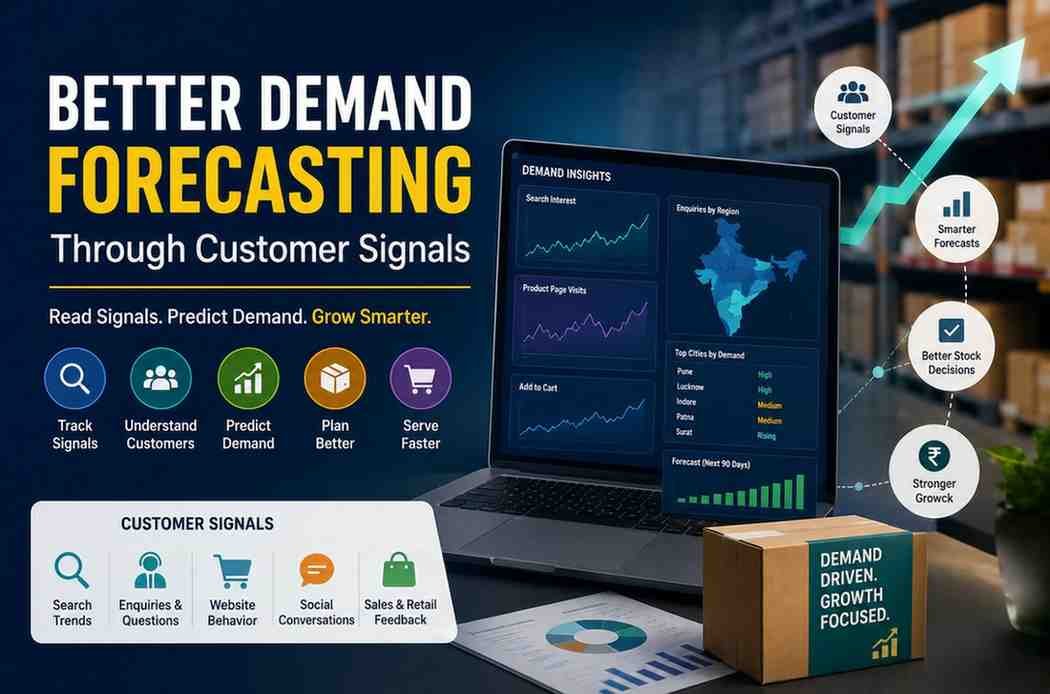
Watch These Customer Signals Together
- Search demand, product-page visits and enquiries by city
- Retailer, distributor and customer-support questions
- Repeat purchases, stock-outs, cart abandonment and bundle response
Read Demand by Region, Not Only Nationally
A national average can hide a local opportunity. A TV9 FMCG media plan can help brands understand how category messages should change by market and language. A clear explanation of GRP, reach and frequency also helps teams separate broad exposure from the repeated attention that actually builds recall.
For digital-first categories, an ABP e-commerce and D2C strategy can connect campaign response to a clearer online purchase path. Agriculture and rural-facing brands can learn from the contextual audience fit of Agrowon advertising, while Hindi OTT advertising can reveal which audience segments respond to video-led education.
In Maharashtra, a consistent programme sponsorship on Zee Marathi can help brands assess the impact of regular household-level visibility rather than isolated campaign bursts.
Turn Insight Into a Supply Decision
Forecasting matters only when it changes inventory, product, pricing or channel decisions. For ready-to-cook brands, a Pune quick-commerce growth plan can connect listing performance, availability, pricing and repeat-order behaviour before the next purchase order is placed.
The objective is not perfect prediction. It is earlier learning. Brands that combine customer behaviour, regional response and channel feedback can act before a demand shift becomes an inventory problem.