
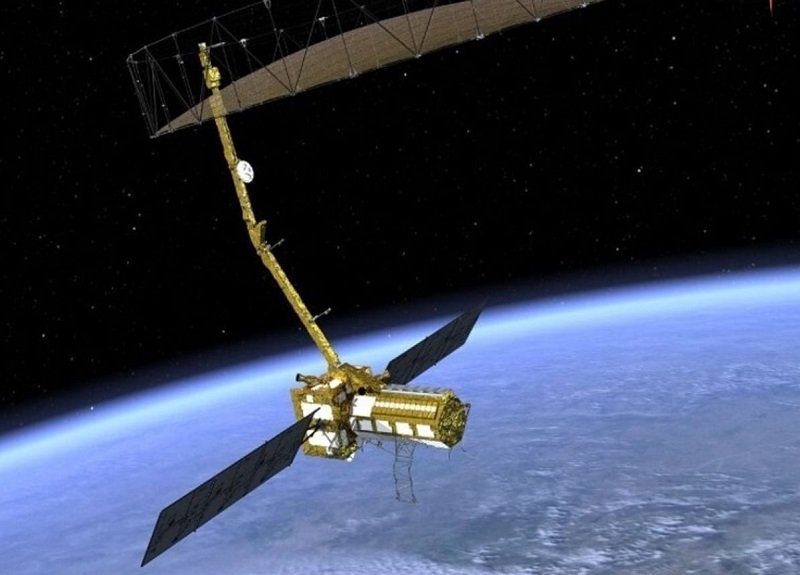

New Delhi. Indian Space Research Organization (ISRO) has shared important information about NISAR satellite. This satellite is a joint project of India and America (NASA), which monitors the earth’s surface with the help of S-band and L-band radar. The main objective of NISAR is to make accurate and regular estimation of moisture in soil. According to ISRO, this satellite will provide high resolution (100 meter) data of the entire landmass of India every 12 days. This will enable farmers, scientists and the government to get almost real-time information about soil moisture.
Information about moisture in soil is very useful for agriculture. It plays an important role in matters like the health of crops, how much irrigation is needed, the risk of drought and water management. Soil moisture varies in different regions of India such as irrigated plains, rain-fed fields, semi-arid regions and high rainfall areas. NISAR data will provide consistent and reliable estimates in all these areas. ISRO has developed a physics-based algorithm, which makes this data more accurate and reliable.
What is the target of NISAR?
NISAR will make observations twice every 12 days (from two different directions), making it easier to monitor changes in soil moisture. With this, farmers will be able to make better irrigation plans, prepare before drought, get weather-based agricultural advice and manage water resources properly. This data will prove to be very helpful for districts, farming communities and planners.
What kind of help will you get?
ISRO said that this level-4 soil moisture data with 100 meter resolution will be prepared at the National Remote Sensing Centre. It will then be made easily available to farmers, researchers, government departments and non-governmental organizations across the country through the Bhunidhi portal. In this way, NISAR satellite will make a major contribution in strengthening India’s agriculture and water resources management. In this way ISRO is continuously performing great feats.