
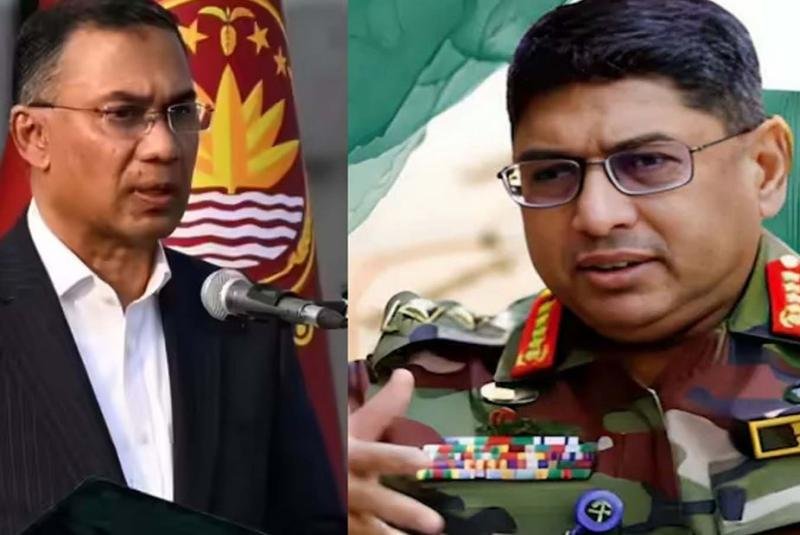

Dhaka. The month of February has brought big changes in the politics of Bangladesh. The power equations have changed with the formation of a full political government led by Tariq Rehman after 18 months of interim rule. This has had a direct impact on the army as well. The ‘command’ of Army Chief General Waqar-uz-Zaman seems to be getting stronger once again.
According to sources, the monitoring and control mechanism which was imposed on the army during the interim government has now been abolished. Earlier, oversight over the Army’s decisions was being maintained through the National Security Advisor (NSA) Secretariat. This system was implemented during the tenure of Mohammad Yunus, who was leading the interim regime, due to which many decisions of the Army Headquarters were affected.
Two big obstacles were removed
According to the information, there were two major obstacles to General Zaman’s full authority, firstly, the lack of political government and secondly, interference in military matters through the NSA Secretariat. Now after the formation of a full-fledged government and removal of the surveillance system, the Army Chief has got relief. Former NSA and current Foreign Minister Khalilur Rahman was accused of deep interference in military matters. On several occasions, decisions of the Army Headquarters were overturned by the NSA office. Due to this, a situation of dissatisfaction remained within the army.
major changes in the army
After the recent developments, changes have been made in the top posts of the army. General Zaman’s trusted lieutenant General Mainur Rahman has been appointed Chief of General Staff (CGS). Whereas Lieutenant General Kamrul Hasan has been given diplomatic role in the Ministry of External Affairs. Brigadier Qaiser Rashid has been promoted to Major General and appointed Director General of DGFI.
Analysts say that these changes have reduced the so-called ‘jamatization’ within the army and have moved towards strengthening the professional structure. General Zaman has long been an advocate of establishing the army as a professional and free force from political influence.
Preparations to return to the barracks
During the interim rule, the army was brought out on the streets to maintain law and order. Now after the formation of the new government, it is expected that the army will gradually return to the barracks. However, officials say that the deployment of troops may continue until the law and order situation becomes completely normal.