
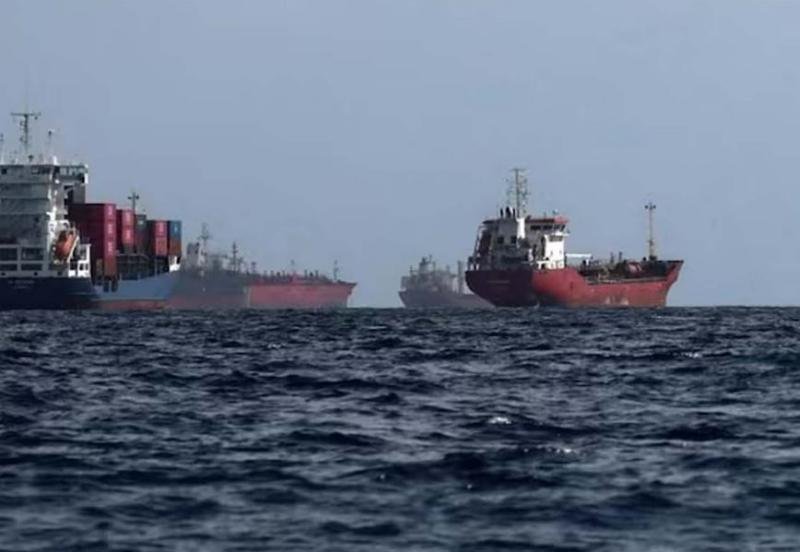

Tehran. The escalating military confrontation between the US and Iran has turned the world’s most important sea route, the Strait of Hormuz, into a battlefield. In a major statement issued by the US Army on Wednesday, it was claimed that 16 ships of the Iranian Navy have been destroyed near the Strait of Hormuz. According to the US Central Command, these ships were engaged in the activities of laying mines in the trade route. US President Donald Trump, while confirming this military action, has warned that if Iran does not stop creating obstacles in the sea route, it will have to face even more serious consequences. Trump clarified on social media that America is using the same technology with which action is taken against drug smugglers.
The most devastating impact of this military confrontation has been on global trade. As of March 10, commercial traffic through the Strait of Hormuz has almost come to a complete halt. Although closure of this route has not been officially announced, insurance companies have refused to insure the ships due to the extreme risk of war. As a result, the world’s major shipping companies like Maersk and Hapag-Lloyd have diverted their ships. Merchant ships are now being routed via the longer route to the Cape of Good Hope, increasing both the time and cost of freight transportation. Eight sailors have lost their lives and several oil tankers have been damaged since the conflict began.
Due to disruption in oil supply, there is tremendous volatility in the prices of crude oil in the international market. On March 9, the price of crude oil jumped to US $ 120 per barrel, which currently remains around $ 88-90. It should be known that about 20 percent of the world’s total oil consumption passes through this narrow route. The energy security of Asia’s major economies, especially India, China, Japan and South Korea, hinges entirely on this path. According to US Energy Administration data, about 85 percent of the crude oil passing through here goes to Asian countries only.
In view of this critical situation, India has increased its diplomatic activity. India’s Foreign Minister Dr. S. Jaishankar spoke to his Iranian counterpart Syed Abbas Araghchi over telephone and conveyed India’s deep concerns. This is the third important conversation between the two leaders after the joint attacks by America and Israel. India’s main concern is to maintain continuity of energy supply and stability in the region, as closure of this route will have a direct impact on the Indian economy and fuel prices.